
Education
A Detail Study About Fire Spread

With major fires appearing in the news more frequently, many people find themselves asking the same question. How did the fire spread so fast?
Modern buildings feel strong and protected. We have alarms, sprinklers, extinguishers and regular inspections, so when a fire moves quickly from one room or floor to the next, it can feel surprising and even unsettling.
The truth is that fire spread is not random. It follows clear and predictable scientific principles. Understanding these principles helps us see how easily a small flame, if unchecked, can grow into a major emergency. Our goal is to breakdown the science in a simple and practical way so that building owners, occupants, safety managers and even you can better understand what drives fire movement.

The 3 main ways fire spreads
There are three primary ways fire spreads. They are convection, radiation and conduction. In almost every building fire, more than one of these three mechanisms are happening at the same time, which is why fire movement can appear unpredictable even from the outside.
Convection, which is the movement of hot smoke and gases rising upward and pushing outward. It is often the fastest and most dangerous method of fire spread. In a building fire, the hot smoke layer quickly finds vertical openings such as staircases, lift shafts, ceiling voids, gaps in pipes and even broken windows. Once smoke finds a path upward, it carries heat into upper floors in quick time, long before flames reach those areas.
Next, we have a term we often hear, Radiation, this is another powerful mode of fire spread. It occurs when intense heat from the fire heats nearby materials to the point where it can ignite even without direct contact. This is how a fire in one room can ignite items across a corridor or how an external fire can affect the floor above. Radiant heat can travel across open spaces, which makes it a significant factor in both internal and external fire spread.
Finally, we have Conduction, which involves heat travelling through solid materials. Building materials such as metal beams, pipes and frames can absorb heat and transfer it into other parts of a building. While conduction is not always the main driver of rapid fire spread, it can create hidden hotspots in walls or ceilings that later ignite materials in areas far from the original fire.
Together, these three mechanisms explain why fire can move quickly and why smoke, heat and flame must all be managed to keep a building safe.
Simple Actions Everyone Can Take to Help Prevent Fire Spread and Make Escape Safer
Here are some sensible fire-safety habits that go beyond installing equipment, these are tips that anyone (homeowner, building occupant, safety manager) can do regularly to reduce risk and improve safety.
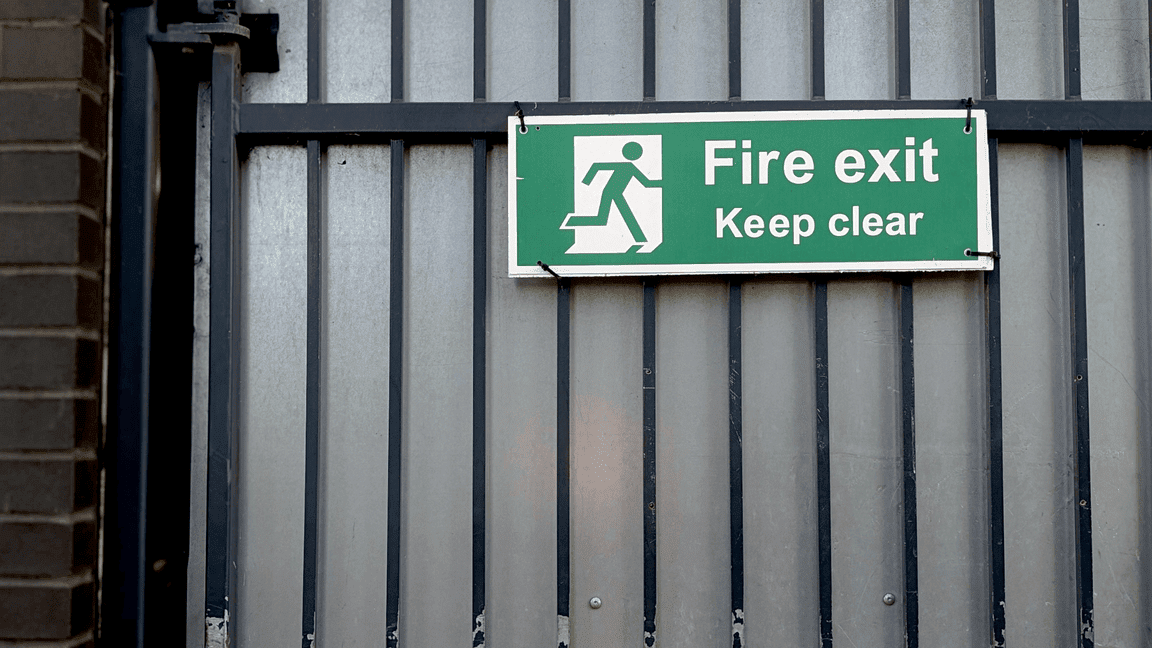
Keep escape routes and fire exits clear at all times – Avoid stacking boxes or equipment around corridors and stairwells, these are paths that you need to evacuate quickly, and they also allow firefighters or emergency teams to access the building more easily. Good housekeeping reduces obstacles and potential fuel loads.
Install and maintain smoke detectors / alarms and test them regularly. Early detection goes a long way; it is often what prevents a fire from growing beyond control. Functioning detectors give occupants time to react and evacuate before smoke and heat build-up.
Check electrical installations and prevent overloads. Faulty wiring, overloaded sockets or damaged cables are common fire triggers. Proper maintenance and avoiding overuse of extension cords or adaptors reduce risk of accidental fire ignition.
Plan and rehearse escape routes and evacuation drills. Know at least two ways out of every room; ensure windows or doors are not obstructed. If in a multi-storey building, never rely on elevators in a fire. Smoke and heat move quickly practice helps occupants react safely rather than panic.
Simple Actions Everyone Can Take to Reduce Fire Spread and Improve Safety
Fire safety is not only about having the right fire protection equipment. It is also about the everyday habits that prevent small issues from becoming major emergencies. Here are practical steps anyone can take, whether you are a homeowner, tenant, or building manager.
Keep escape routes and fire exits clear at all times.
Avoid stacking boxes, furniture and/or equipment along corridors, stairwells or in front of exit doors. These spaces are critical paths for evacuation and for firefighters who may need to enter the building. Clear routes also help to reduce the overall fuel load, which leads to a slower fire growth.
Install and maintain smoke detectors or alarms and test them regularly.
Early detection is one of the most powerful tools in fire safety. A working smoke alarm alerts occupants long before flames or smoke become overwhelming, giving valuable time to react, contain or escape. Make testing a regular habit and replace batteries when needed.
Check electrical installations and avoid overloading circuits.
Faulty wiring, damaged cables and overloaded sockets are among the most common causes of accidental fires. Ensure extension cords are used safely and temporarily, avoid “daisy chaining” adaptors, and have any irregularities inspected by a licensed electrician.
Plan and rehearse escape routes and evacuation procedures.
Know at least two ways out of your home or workspace and make sure these paths are always accessible. Especially in multi-storey buildings, never rely on lifts during a fire. Practising your escape plan helps people remain calm during real emergencies and reduces the time spent searching for exits when seconds matter.
These simple behaviours strengthen the fire safety systems already in place and help everyone play an active role in preventing fire spread.