
Education
Fire Extinguishers Explained: Understanding the Labels

Fire extinguishers are one of the most recognisable and commonly installed fire safety tools around us. From offices and factories to car parks, ships, and even vehicles, you will almost always find one nearby. Yet despite how familiar they look, many people don’t realise that not all fire extinguishers are the same, nor are they designed to work in the same way.
This why we’re creating this series. Fire Extinguishers Explained breaks down fire extinguishers into simple, easy-to-understand digestible parts. Instead of overwhelming technical details, we’ll explore one topic at a time, from labels and colour bands to how different extinguishers work and where they should be used. Our aim is to help everyone build a clearer understanding of fire extinguishers in digestible bits, so fire safety feels more approachable and practical for everyday use.

Fire Extinguisher Standards in Singapore
In Singapore, the way fire extinguishers are designed, tested, and labelled is not based on personal corporate preferences. In fact, the selection and use are guided by Singapore Standard SS 578, the Code of Practice for fire extinguishers, which is aligned with the EN 3 series of standards used internationally. These standards ensure that fire extinguishers placed in buildings are tested consistently and labelled in a way that helps users and safety professionals quickly understand their intended use.
This is why you will often see different brands of fire extinguisher but yet they have similar labels, symbols, and markings on extinguishers across offices, factories, and public spaces in Singapore. They are not just branding or decoration. They exist to communicate important information immediately, especially in an emergency. Understanding what these labels mean is the first step toward using the right extinguisher for the right fire risk and avoiding dangerous assumptions.
In this first part of the series, we’ll start with the basics by explaining what the labels on a fire extinguisher actually tell you, before moving on to colour bands and extinguisher types in future articles.
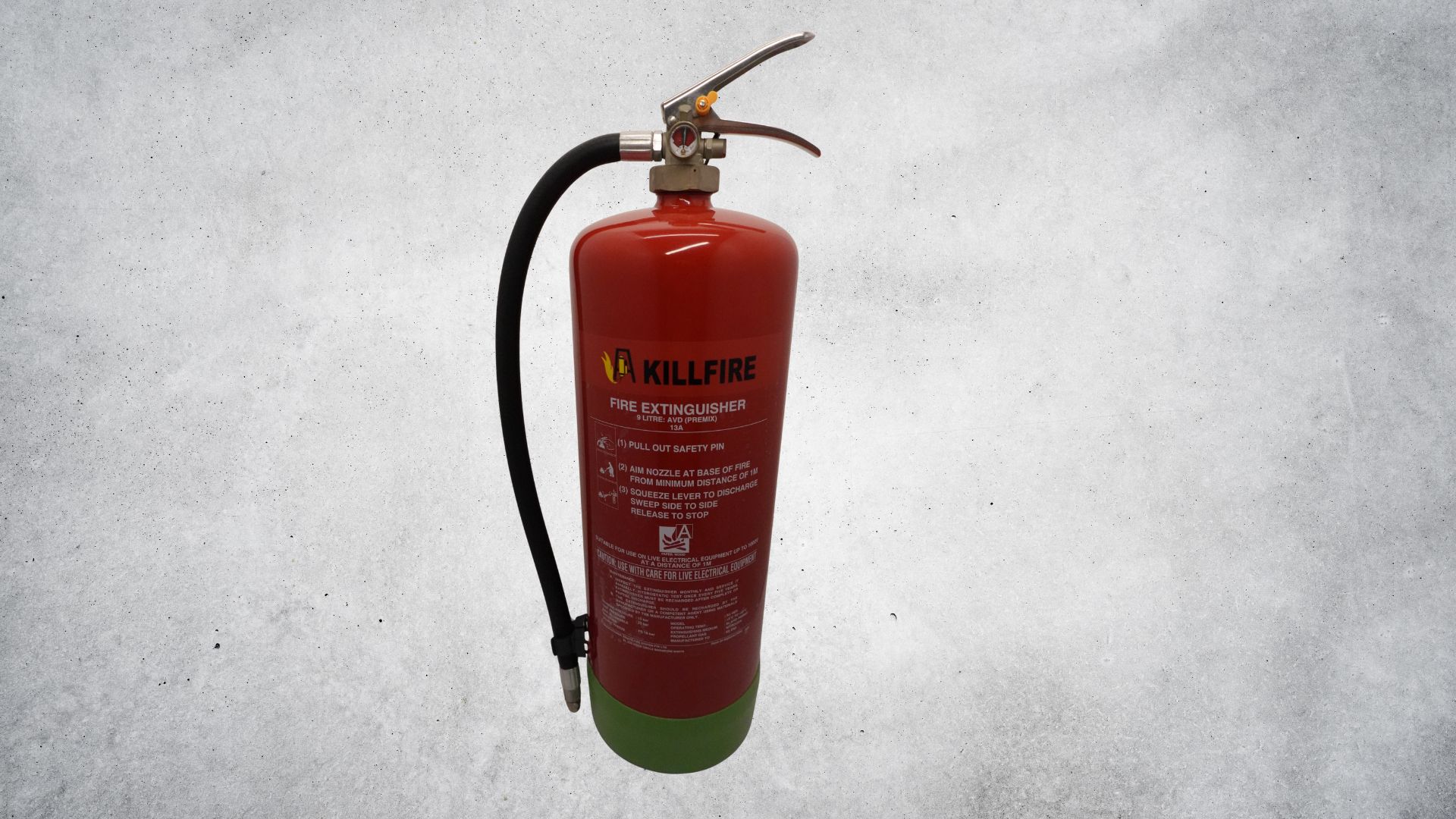
Breaking It All Down
One of the first things you’ll notice below the “Fire Extinguisher” wording is a line of text that includes numbers and letters, such as “2A 34B” or something similar. This information is often printed near the bottom of the label and is known as the fire rating. It is not random, and it is not a model number. It tells you how much fire the extinguisher is capable of handling under standard test conditions. In simple terms, the numbers relate to the extinguisher’s capacity and firefighting capability. A higher number generally means the extinguisher can deal with a larger fire. The letters that follow refer to the type of fire it has been tested on, such as solid materials or flammable liquids. This is why two extinguishers that look similar may have very different ratings. One may be suitable for a small room or vehicle, while another is intended for larger spaces or higher fire risks.
It is often followed by a simple how-to-use guide printed directly on the label. While the layout and graphics may vary slightly between brands, the purpose is to provide clear, quick instructions that can be understood even under stress. These instructions are usually shown using simple text and pictograms, guiding the user through the basic sequence of actions, such as removing the safety pin, aiming the nozzle, and discharging the extinguisher toward the fire. The use of symbols is intentional, allowing people to understand the steps even if they are unfamiliar with the brand or language.
You will also notice letters such as A, B, or C appearing on the label or alongside the fire rating. These letters refer to different types of fire risks, based on what is burning. While they look simple, they represent an important concept in fire safety, because not all
fires behave the same way and not all extinguishers respond to them equally. Rather than rushing through this topic here, we’ll be covering it properly in another blog post, where we will explore what different class of fires actually mean, why they matter, and how understanding them helps you make safer decisions during an emergency.
Lastly, every fire extinguisher also includes fine print that is easy to overlook but important to understand. The fine print reminds users that extinguishers must be regularly inspected and serviced to remain effective. Moreover, you may see references to standards, approvals, temperature limits and even the company’s information, confirming that the extinguisher is certified for use and suitable for its environment.
Thank you for taking the time to read the first part of our Fire Extinguishers Explained series. We hope this breakdown of fire extinguisher labels has helped make fire safety a little clearer and more approachable.
In the next article, we’ll dive deeper into the different fire types and classifications, explaining what they mean and why they matter. Stay tuned as we continue breaking down fire extinguishers into simple, practical knowledge you can use every day.