
Education
Fire Extinguishers Explained: Understanding Colour Bands and What They Mean
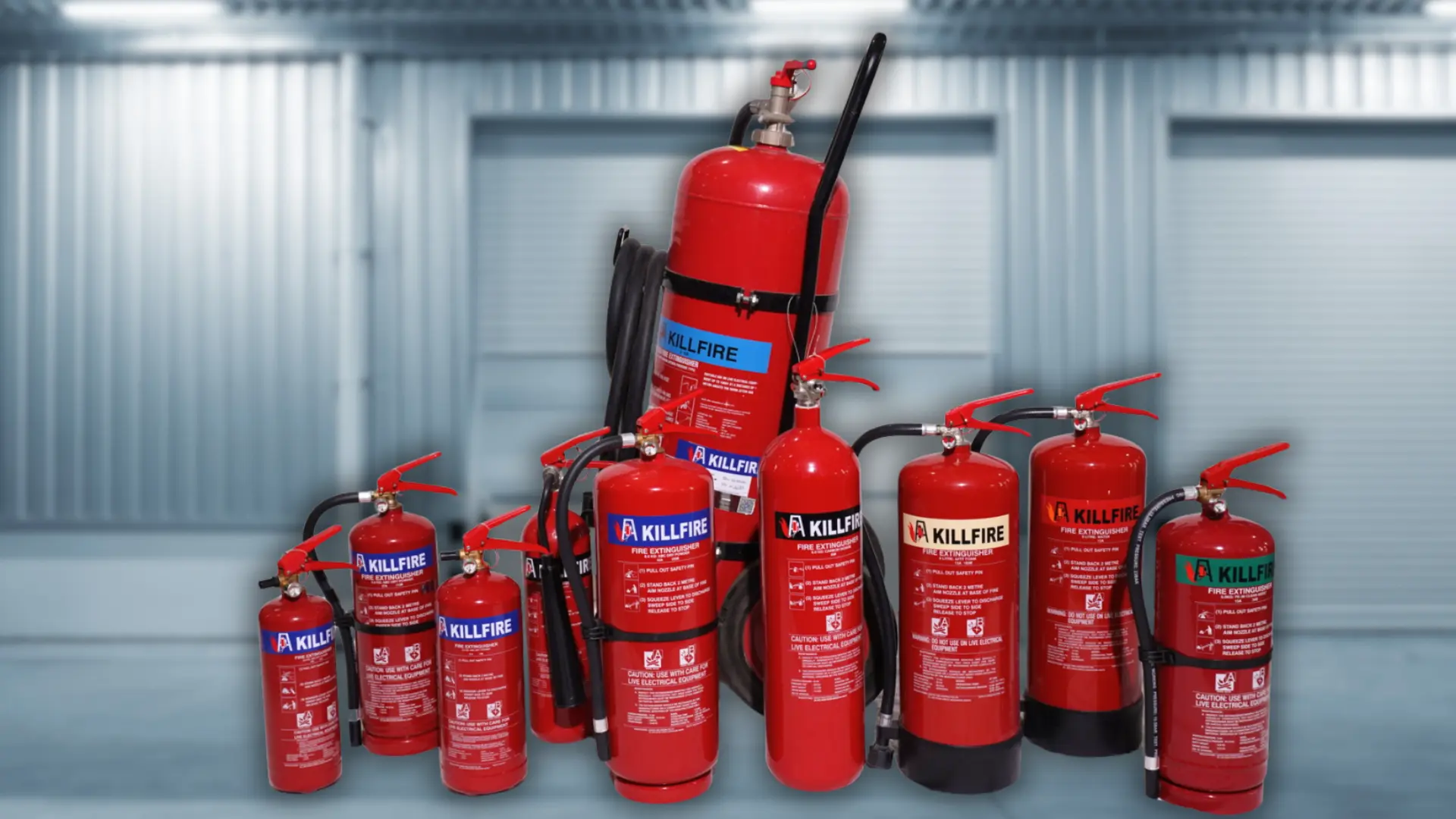
In the earlier parts of this series, we explored how to read fire extinguisher labels and how fires are classified based on what is burning. These form the foundation of fire safety understanding.
But in real situations, people do not always have time to read labels in detail. This is where colour bands play an important role.
Colour bands are designed to help users quickly identify the type of extinguisher they are dealing with. However, they are often misunderstood or relied on too heavily without understanding what they actually represent.
In this article, we explain what these colour bands mean, how they are used in Singapore, and why they should always be used together with the information on the label
So Why Do Fire Extinguishers Have Different Colours?
Fire extinguishers are designed to be used quickly and correctly during an emergency. In situations where time is limited, visual cues become important.
Colour bands provide a simple way to distinguish between different types of extinguishing agents. This helps users make faster decisions and reduces the risk of using the wrong extinguisher.
In Singapore, portable fire extinguishers generally follow SS 578, which aligns with European standards. Under this system, extinguishers are typically red in colour, with a coloured band or marking to indicate the type of extinguishing agent inside. This standardisation helps ensure consistency across buildings, workplaces, and industries.
How Colour Bands Work
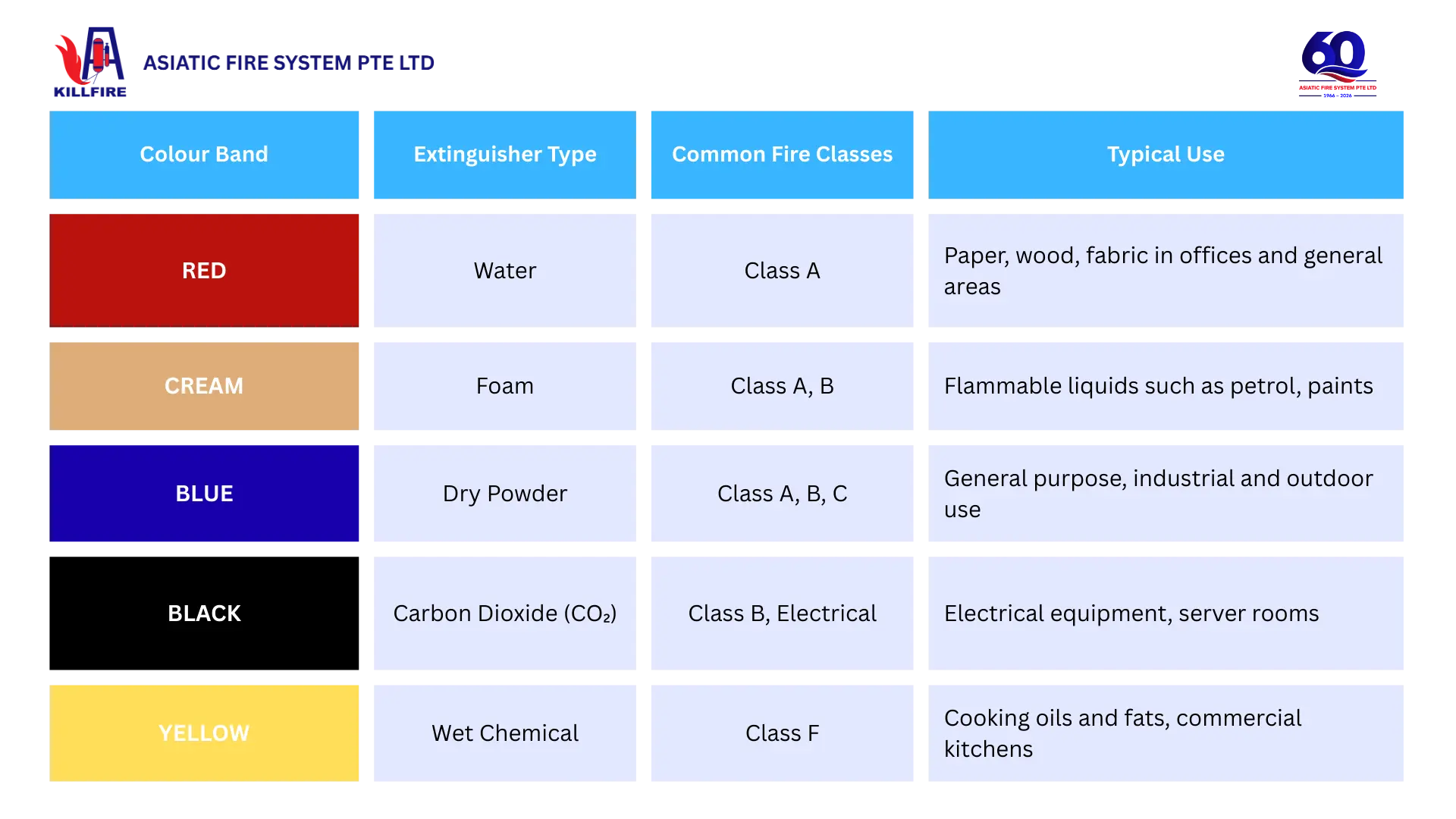
It is important to understand that colour bands do not represent fire classes directly. Instead, they indicate the type of extinguishing agent inside the extinguisher.
For example, a blue band indicates dry powder, but the extinguisher itself may be rated for multiple fire classes such as Class A, B, and C.
This is why colour should only be used as a quick reference. The label and rating on the extinguisher always provide the most accurate information about what it can be used for.
Common Fire Extinguisher Colour Bands
Fire extinguishers can be quickly identified by their colour bands, which indicate the type of extinguishing agent inside. The table below provides a simple reference for the most common types used in Singapore.
Why Some Extinguishers Do Not Follow Standard Colour Identification
Not all extinguishers fit neatly into the standard colour band system. For example, Class D extinguishers, which are used for combustible metal fires, are highly specialised. They are usually identified by clear labelling rather than standard colour bands and are designed for specific types of metals. In these cases, relying on colour alone is not sufficient. Proper identification and training are important.
A Simple Way to Identify the Right Extinguisher
In practice, a quick and reliable approach is:
- Look at the label
- Check the fire class rating
- Use the colour band as a supporting reference
This ensures that the extinguisher is suitable for the situation before it is used.
Final Thoughts
Understanding colour bands is an important step in recognising different types of fire extinguishers, especially in situations where quick decisions are needed. However, colour should always be used as a guide, not the final answer. Taking the time to understand fire types, extinguisher ratings, and how they apply to your environment is what ultimately ensures safe and effective use.
If you are unsure about which fire extinguishers are suitable for your premises, or need guidance on compliance and proper setup/usage, our team at Asiatic Fire System is here to help. We provide practical advice based on real operational needs and regulatory requirements.
Feel free to reach out to us through our Contact Us page or drop us an enquiry. Our specialists are available to provide free consultations and help you make informed and confident fire safety decisions.